
CONFIRMATION · TIMING · NEXT STEPS
Dog Pregnancy Ultrasound
Ultrasound is preferred for canine pregnancy confirmation. It may detect pregnancy at about 3 weeks; a later appointment can give a clearer answer.
| Timing | What it may show | Reliability | Booking note |
|---|---|---|---|
| Around day 20 | Pregnancy may be detectable. | An early result may be inconclusive. | Confirm timing with the clinic. |
| After day 28 | Pregnancy confirmation. | More dependable than an early attempt. | Bring the breeding history. |
| Late pregnancy | A separate litter-count assessment. | X-ray is better for counting. | Do not use an ultrasound count as final. |
Scroll the table sideways to read every column.
When an Ultrasound Can Be Done
Early timing: AKC’s reproduction seminar summary. Later scan reliability and counting limitations: VCA pregnancy reference.
Use the early testing point as a topic for a booking conversation, rather than a promise that the earliest available slot will settle everything. Give the clinic the actual mating dates and say whether ovulation was established through veterinary testing. Do not quietly substitute a remembered mating date for a clinical ovulation date when filling out the history.
If the date is uncertain, explain why: mating may have been possible without being observed, or records may be incomplete. Ask the clinic to choose an appropriate appointment from that history. An online calendar cannot resolve missing information by making the date look precise. Keep any estimated date clearly labeled when sharing it with another person caring for your dog.
- For calendar planning, use the dog pregnancy calculator; arrange confirmation separately with your veterinarian. If you are calling because your dog seems unwell, lead with that concern instead of asking only for a routine pregnancy scan. The clinic needs the reason for your call to decide what appointment is appropriate.
What a Dog Pregnancy Ultrasound Can and Cannot Tell You
The useful outcome is the veterinarian's interpretation, not your own reading of a saved scan image. Ask whether pregnancy was confirmed, whether anything requires further assessment, and what you should do next. If the clinician describes a result as uncertain, keep that wording in your notes; do not turn it into a definite answer when telling family members.
A result belongs to the examination at which it was obtained. Ask what it means for care from here, rather than treating a scan photograph as a guarantee about delivery. Save the written report alongside the date and the clinic's instructions. If another veterinarian becomes involved, share the report instead of relying on a recollection of what appeared on the screen.
It Cannot Reliably Count Puppies
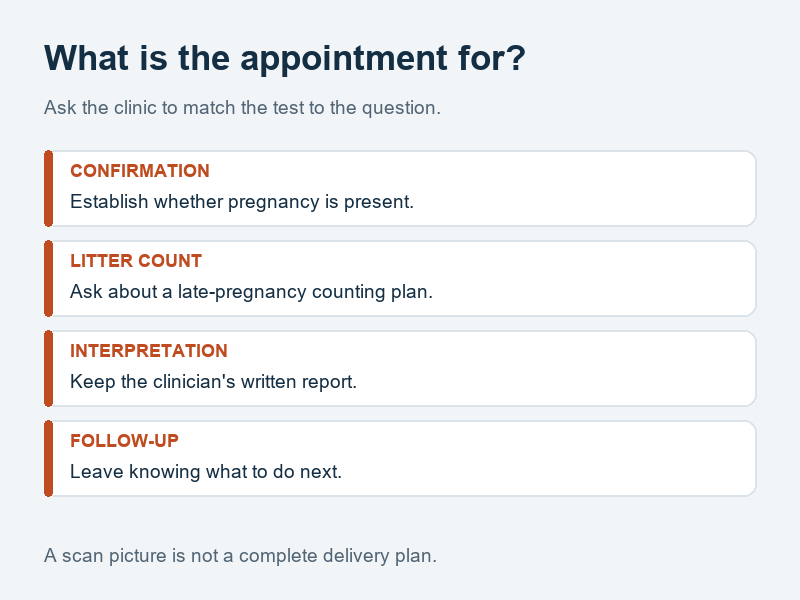
Do not make an ultrasound image your final litter-count record: ultrasound is unreliable for an exact puppy count. When the conversation turns to knowing whether delivery is complete, ask about a later counting plan. The limitations of ultrasound counting are documented in the VCA pregnancy reference.
If someone mentions a possible count during the appointment, ask whether it is provisional and record that qualification beside it. This prevents an informal impression from becoming an assumed target during labor. Keep pregnancy confirmation and litter counting as separate entries in your records, with the test used for each clearly identified.
Ultrasound vs Blood Test vs X-Ray
| Method | What it can answer | Limitations |
|---|---|---|
| Ultrasound | Whether pregnancy is present. | Early results may be unclear; exact puppy counting is unreliable. |
| Relaxin blood test | Whether the pregnancy-related hormone is detected. | A negative result can be false; interpretation and follow-up matter. |
| Late-pregnancy X-ray | A more reliable litter count. | A counting examination does not replace the delivery care plan. |
Scroll the table sideways to read every column.
Ask what decision each proposed test supports before comparing appointments. A blood result and an imaging report are not interchangeable records, and a test selected for confirmation need not answer the counting question. Your veterinarian should explain why a test is being recommended now and whether another visit serves a different purpose.
Relaxin Blood Test
A relaxin blood test can help establish pregnancy, but a negative result can be false. Ask how the result fits the breeding history and whether further testing is needed. VCA's pregnancy-testing reference documents this limitation; a negative report should not be interpreted without the clinic's advice.
- When discussing the result, use the test's name rather than saying only that your dog “had blood work.” Bring the actual report if testing took place elsewhere. That lets the receiving clinic review what was tested and what was reported without asking you to reconstruct the details from memory.
X-Ray in Late Pregnancy
Late pregnancy is the time to discuss an X-ray for the litter-count question. Discuss that appointment with your veterinarian rather than using ultrasound to supply a definitive count. This timing and purpose are supported by the VCA pregnancy reference.
Ask the clinic to put the counting result and delivery instructions together in your records. A count should inform the veterinary plan, not become permission to ignore concerning changes during birth. If you have questions about the examination itself, raise them before the appointment so the clinician can explain its role in your dog's care.
How to Prepare for the Appointment
Call the clinic for its preparation instructions. Ask about meals, water, arrival arrangements, and anything it needs you to bring; do not apply instructions from an unrelated scan or another pet. Tell the team about current medications and supplements, and ask before making changes. If written instructions are unclear, have the clinic clarify them before the visit.
Prepare a short record containing known breeding dates, previous test reports, the reason for the appointment, and your main questions. Tell staff if your dog is anxious about handling so they can discuss an appropriate approach. Ask whether you will speak with the interpreting veterinarian and how any report will reach your regular clinic.
- Before leaving, write down the next action in plain language: whom to contact, what to watch for, and whether another appointment is recommended. Keep unanswered questions on the list. A useful visit ends with an understandable plan, rather than a photograph that you are left to interpret at home.
What Affects the Cost of a Pregnancy Scan
There is no dependable single price to quote for your appointment. The cost varies with location, clinic type, equipment, and the scope of the examination. A focused pregnancy check usually has a narrower scope than a full abdominal ultrasound, so a price advertised for a general abdominal scan may not describe the service you need.
- Location and clinic: Request a quote from the practice that will perform the examination, especially if specialist interpretation is involved.
- Scope: Ask whether the quote is for pregnancy confirmation or a broader abdominal investigation.
- Included services: Check whether the consultation, written report, and any additional tests are included or quoted separately.
- Follow-up: Ask how an inconclusive result would be handled and whether a return visit would require another quote.
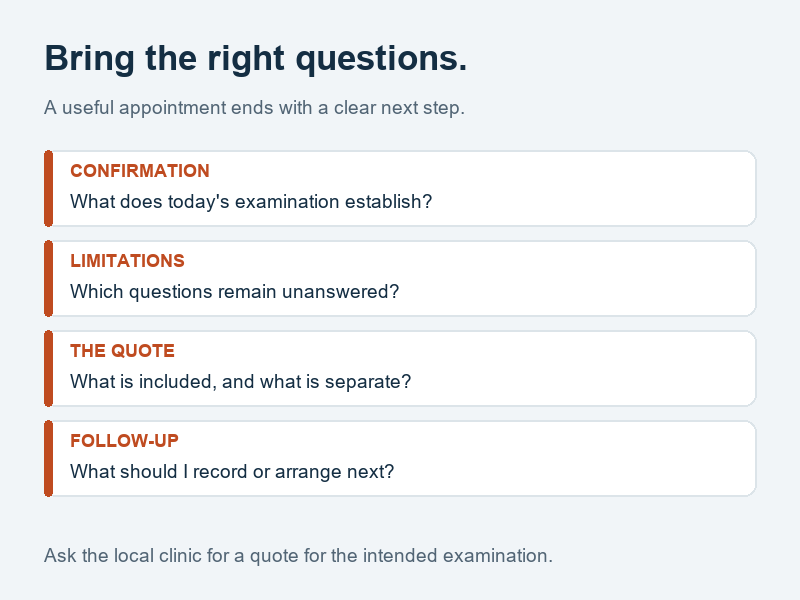
Get a useful estimate: Call a local clinic and ask, “What is included in a pregnancy-confirmation scan quote, and what might be charged separately?” Compare like-for-like services before choosing an appointment.
Questions to Ask at the Appointment
- “Does today’s result confirm pregnancy, or is it still inconclusive?”
- “What can this examination tell us, and which questions remain unanswered?”
- “If we need a litter count, what examination should we plan later?”
- “What should I record at home, and which changes mean I should call sooner?”
- “What is the next action, and can I take the report and instructions home?”
Frequently Asked Questions
Is a pregnancy scan the same as a puppy-count appointment?
No. Ask whether the visit is intended to confirm pregnancy or establish a litter count, because ultrasound should not be treated as an exact count.
What should I ask after an inconclusive scan?
Ask what remains uncertain and what follow-up the veterinarian recommends. Keep that plan with the report rather than relabeling the result yourself.
Does a negative relaxin result settle the question?
Not necessarily, because false-negative results can occur. Let your veterinarian interpret the result alongside the history and explain whether another assessment is needed.
Should I withhold food before the scan?
Ask the clinic performing the examination for its specific preparation instructions. Do not assume that directions for another appointment apply to this visit.
Can I use a scan photograph to plan the birth on my own?
Keep the photograph as part of the records, but ask for the clinician's interpretation and delivery plan. The picture alone does not replace advice about what to monitor or when to call.