
OBSERVE · RECORD · ASK YOUR VET
Signs of Dog Pregnancy
Early signs of dog pregnancy can be subtle, and many apparent symptoms overlap with false pregnancy. Changes at home can help you describe what is happening, but they cannot confirm that puppies are on the way.
This guide groups dog pregnancy symptoms into broad stages so you can organize your observations. The week labels are not a schedule that every sign must follow. Canine pregnancy means the same thing as dog pregnancy, and confirmation requires a veterinary examination and appropriate testing rather than a checklist of appearances.
Early Signs (Weeks 1-3) Signs of Dog Pregnancy to Observe
During the early part of a possible pregnancy, outward changes may be difficult to notice. You might be watching appetite, energy, or how much attention your dog seeks, but none of these observations establishes pregnancy. A quiet afternoon or an unfinished meal is not enough to place her on a pregnancy timeline. The AKC reproductive-cycle guide describes possible changes while emphasizing the value of veterinary assessment.
Start with what you actually know: whether mating was observed, when it happened, and whether the clinic established an ovulation date. Keep an uncertain date marked as uncertain. You can use the dog pregnancy calculator to organize a provisional calendar, but a calculated due date does not make a pregnancy more likely or confirm that one exists.
For notes that will help a consultation, describe the change rather than naming a diagnosis. Write “left part of her usual meal” instead of “pregnancy nausea,” and include when you noticed it. That distinction keeps an observation useful even if the veterinarian later finds a different explanation.
Signs That Appear in Weeks 4-6 Dog Pregnancy Symptoms and Body Changes
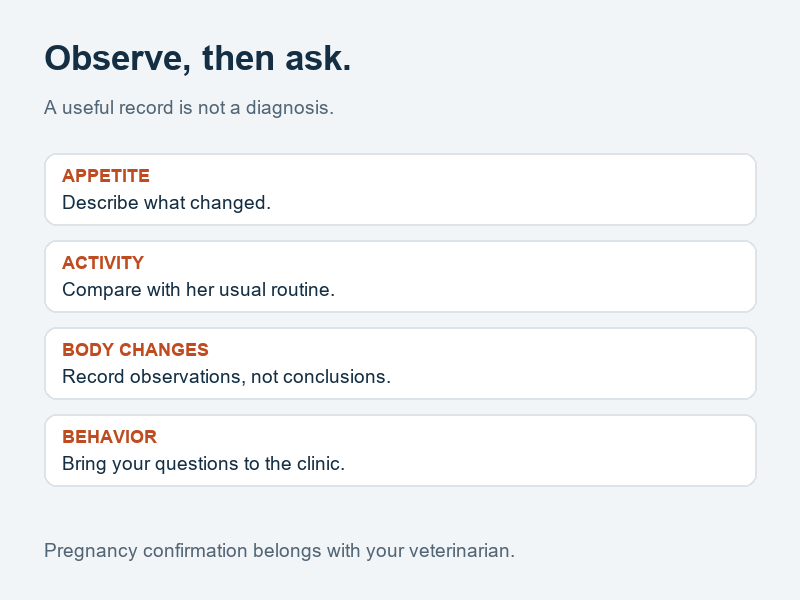
Changes in body shape, appetite, or the appearance of the nipples may draw more attention as a suspected pregnancy progresses. Treat these as topics to discuss, not as proof of a particular stage. A fuller abdomen does not tell you how many puppies there are, and a visible change cannot establish when conception occurred.
Keep your records consistent: use the same description for appetite, note any food changes, and bring existing weight records if you have them. Avoid deciding that a change must be pregnancy-related simply because it fits the week shown on a calendar. Tell the clinic about other changes in routine that may help explain what you are seeing.
Do not use photographs from another dog's pregnancy as a diagnostic comparison. A photograph supplies neither that animal's examination findings nor your dog's history. When seeking advice, your own dated observations and breeding records are more useful than trying to match a body outline to a picture online.
Late Pregnancy Signs (Weeks 7-9)
Nesting behavior, restlessness, and more noticeable mammary changes may prompt questions about approaching delivery. Those observations still need context: nesting by itself does not tell you that labor has started, and milk production does not independently prove pregnancy. The overlap with false pregnancy is a reason to ask for an assessment rather than treat a familiar-looking sign as confirmation.
If a veterinarian has confirmed pregnancy, use the care plan from that clinic to decide what to monitor and when to call. Keep the clinic's contact information with your records so another person helping with care can find it. Ask how to reach veterinary help outside normal opening hours before you need that information.
The due date calculator can keep the estimated date easy to find, but it cannot assess a dog who seems unwell. Do not wait for the displayed date to arrive before raising a concern, and do not use a quiet day as evidence that a veterinary check is unnecessary.
Signs That Can Be Misleading
A symptom list can organize questions, but it can also encourage you to count “matches” and assume that enough matches prove pregnancy. There is no diagnostic score on this page. The same observation can belong to different situations, so the next step is to check its meaning with a veterinarian rather than collect more matching signs.
False Pregnancy
False pregnancy can involve mothering behavior, nesting, mammary changes, or milk production without an actual pregnancy. A dog carrying toys or preparing bedding is therefore not providing a reliable answer about whether she is carrying puppies. VCA's false-pregnancy guidance explains this overlap and why an examination matters.
Tell the veterinarian whether mating was observed, merely possible, or not known to have occurred. These are different histories, and there is no benefit in choosing the one that seems to fit the symptoms. If a previous episode was called false pregnancy, mention it, but do not assume the current episode has the same explanation without asking.
Weight Gain From Other Causes
Weight gain is not a pregnancy test. Changes in feeding or activity are information worth reporting, and an enlarged abdomen should not automatically be described as puppies. A veterinarian can assess the change in the context of your dog's overall condition rather than using the outline of her belly alone.
Bring the food name, an account of meals and treats, and any recent weight records to the appointment. Avoid changing portions just to make her appearance fit a pregnancy chart. Ask the clinic for an individualized feeding plan once the situation is understood; an online stage label is not a feeding prescription.
How to Confirm a Dog Pregnancy
Contact your veterinarian and describe the breeding history and the changes you have noticed. Ask what kind of appointment is appropriate and which records to bring. Keep confirmation and date estimation as separate questions: finding out whether a pregnancy exists is different from estimating when delivery might happen.
What a Vet Can Check
Your veterinarian can examine your dog and decide whether imaging or a pregnancy-related blood test is appropriate. The choice and interpretation depend on the clinical situation, so this page does not assign a testing appointment from symptoms alone. VCA's pregnancy-testing overview describes veterinary methods used to investigate pregnancy.
Ask what the result can establish, what remains uncertain, and whether a follow-up visit is needed. If a result is inconclusive, record the clinic's explanation rather than rewriting it as either “pregnant” or “not pregnant.” Keep any recommended next step beside the result so that the uncertainty does not disappear when you look back at your notes.
If the clinic provides an ovulation date, label it clearly and distinguish it from the date blood was drawn. That helps you use timing information consistently later. Do not try to confirm pregnancy yourself by pressing the abdomen; take your questions about physical examination to the clinic.
Frequently Asked Questions
Does a change in appetite prove my dog is pregnant?
No, appetite alone cannot confirm pregnancy. Describe what changed, when you noticed it, and whether her food or routine also changed so your veterinarian can assess the observation in context.
Can nesting happen without a pregnancy?
Yes, nesting and mothering behavior can overlap with false pregnancy. Keep a record of the behavior and the breeding history, and ask your veterinarian to establish what is happening rather than treating nesting as proof.
Do enlarged nipples mean puppies are on the way?
Enlarged nipples or other mammary changes are not sufficient to confirm pregnancy. Similar changes can have another explanation, including false pregnancy, so discuss them with your veterinarian.
Should I change her food based on symptoms alone?
Do not use a symptom checklist as a feeding plan. Share her current food, portions, treats, and any weight records with your veterinarian and ask what changes, if any, are appropriate.
What should I write down before a pregnancy appointment?
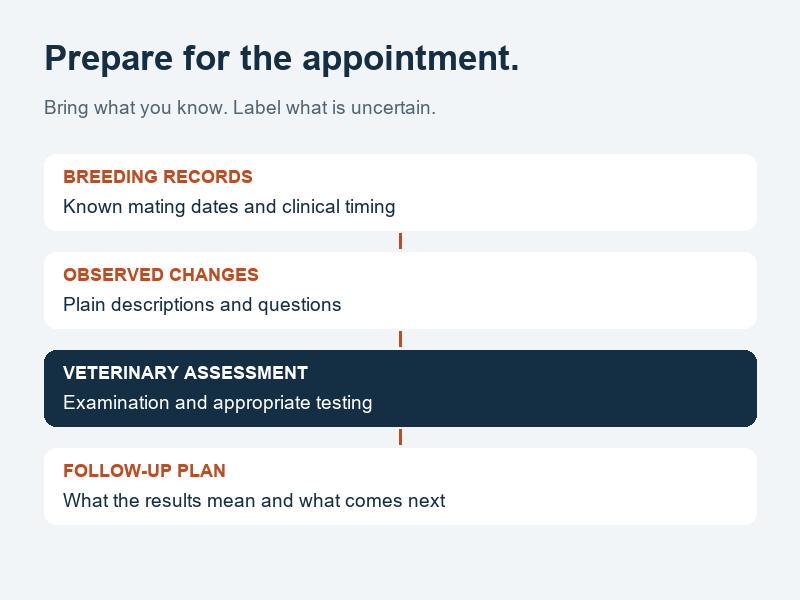
Record known mating dates, any veterinarian-established ovulation date, and a plain description of observed changes. Bring existing test results and note which dates or observations are uncertain rather than filling the gaps with guesses.