
How Long Are Dogs Pregnant?
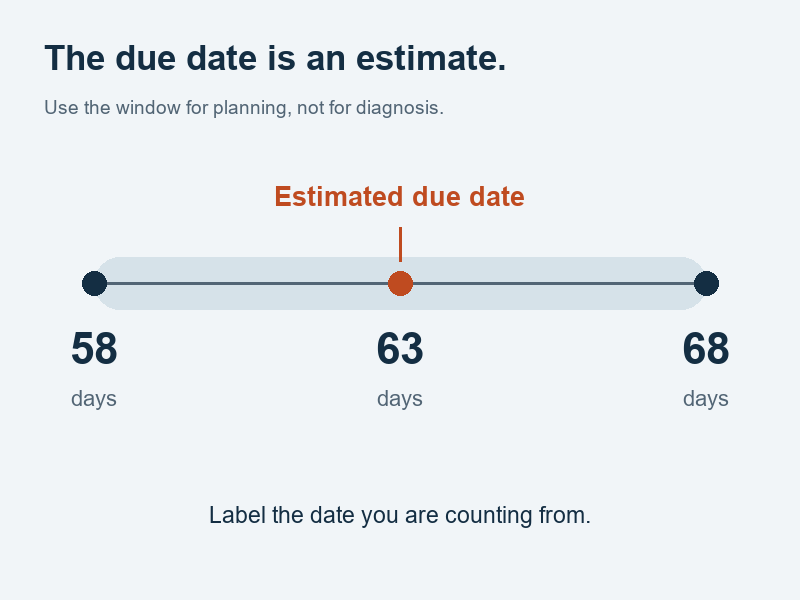
Dogs are pregnant for about 63 days. The normal range commonly used for planning is 58–68 days, and counting from a veterinarian-established ovulation date is more accurate than counting from mating. This range is a guide, not a guarantee about when a particular dog will deliver.
The dog gestation period means the time a dog carries a pregnancy. Canine pregnancy is simply another name for dog pregnancy. The useful question after “how long are dogs pregnant?” is which event starts your count, because a precise calculation cannot fix an uncertain starting date.
The 58-68 Day Range Explained
The central estimate gives you a date to plan around, while the surrounding range reminds you that it is not an appointment for birth. Use the expected window when organizing help and discussing veterinary care. Do not interpret being inside that window as evidence that everything is progressing normally, or being outside it as a diagnosis on its own.
The starting event matters when comparing a range from different sources. A mating-based estimate and an ovulation-based estimate do not necessarily refer to the same point in the reproductive process. Veterinary references can describe broader mating-based intervals; this site's planning band is not a universal boundary. The Merck Veterinary Manual's timing guidance explains why a breeding date does not establish conception.
Keep the estimated date and its basis together in your notes. A date labeled “from observed mating” conveys something different from one labeled “from ovulation identified by the clinic.” If someone else will be caring for your dog, share both pieces of information rather than passing along an unexplained due date.
Counting From Mating vs Counting From Ovulation
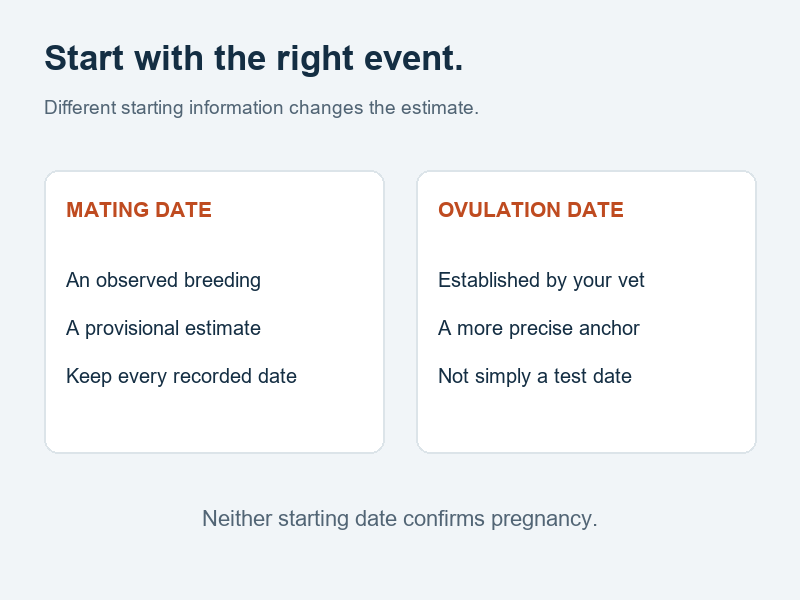
A mating date is often the clearest event an owner has recorded. Adding about 63 days supplies a provisional estimate, but it does not mean conception occurred on the recorded day. If mating took place on several dates, keep all of them. Choosing whichever date produces the most convenient result would hide uncertainty instead of resolving it.
An ovulation date established by a veterinarian provides a better anchor for the countdown. That is different from entering the date of a laboratory appointment or assuming that every progesterone test marks ovulation. Ask the clinic which event its date represents before using it in a calculation. AKC's reproductive-cycle explanation distinguishes these reproductive landmarks.
When you receive new information, keep the original breeding record and note why the estimate changed. An updated estimate is not evidence that pregnancy itself sped up or slowed down. It may simply reflect a more useful starting point. This is especially important when different people have been maintaining the records.
Have a recorded date? Use the dog pregnancy calculator to see the estimated due date.
What Can Shorten or Lengthen the Timeline
There are two different questions here: whether the estimate changes when its starting information changes, and whether biological factors affect the actual pregnancy. Do not use the second question to improvise corrections to the first. Litter size, breed, and reproductive history belong in a veterinary assessment, not in an unsupported formula that adds or removes days.
Litter Size
Research has reported an overall tendency toward shorter gestation with larger litters and longer gestation with smaller litters, but that relationship did not consistently hold within individual breeds in the same study. It therefore does not supply a reliable adjustment for your dog's date. The published study of litter size and breed supports discussing the association cautiously rather than treating it as a rule.
Do not estimate litter size from the appearance of the abdomen and then move the due date to match. That would stack an uncertain guess on top of another estimate. Bring any clinically assessed litter information to the veterinarian who is managing the pregnancy and let it inform the overall care plan.
Breed Size
Breed-related differences do not establish a simple rule that bigger dogs always deliver earlier or smaller dogs always deliver later. The research above does not justify turning body size into a universal direction of change. This guide therefore makes no automatic earlier-or-later adjustment based on size and provides no breed-specific day counts.
Give your veterinarian the breed information you know, including uncertainty about mixed ancestry. Do not select a breed merely because its supposed pregnancy length fits the date you expected. A general website estimate should remain clearly labeled while the clinic considers the dog's own records and examination findings.
First-Time Pregnancy
A first pregnancy is not a sound reason to automatically lengthen or shorten the countdown. This guide does not assume that a dog carrying her first litter must deliver later, and it does not remove days because she has delivered before. Without dependable individual timing information, either correction would create confidence that the calculation has not earned.
For an owner without previous delivery experience, the useful response is preparation: ask which observations to report, who to contact, and how to follow the clinic's plan. If previous reproductive records exist, bring them. If they do not, leave that part of the history unknown rather than inventing a pattern.
When to Expect Labor
Expect the due date to guide preparation, not to schedule the start of labor. Keep the veterinary plan accessible before the estimated window, and make sure anyone helping with care knows where to find it. Ask the clinic what should prompt contact and which service to use when the regular office is closed.
A calendar cannot determine whether labor has begun or whether a pregnancy is progressing appropriately. If your dog seems unwell, seek veterinary advice rather than waiting for the expected date. Likewise, do not try to bring on labor because the central estimate has passed. Questions about a delayed delivery need an assessment, not a different choice of date in a calculator.
When contacting the clinic, state the known mating dates, whether ovulation was established, and what you are observing now. Say explicitly if pregnancy has not been confirmed. These details are more useful than simply saying that an online countdown has ended, because they distinguish the calendar estimate from the dog's actual condition.
Frequently Asked Questions
Does mating day always mark the start of pregnancy?
No, a recorded mating date does not establish the date of conception. Keep it as a useful planning reference while clearly labeling the estimate as mating-based.
Is a progesterone test date the same as an ovulation date?
Not automatically; the date a sample was taken and the ovulation date identified by the veterinarian are different pieces of information. Ask the clinic which date to use rather than substituting the laboratory appointment date.
Should I average several mating dates?
Averaging produces a date but does not establish conception or remove uncertainty. Preserve each recorded mating date and ask your veterinarian how to interpret the breeding history.
Does the due date tell me when to arrange a delivery procedure?
No, an online estimate cannot decide whether a procedure is needed or when it should take place. Those decisions require your veterinarian's assessment and a plan specific to your dog.
Why did my estimate change after a veterinary visit?
The clinic may have clarified the starting date or interpreted information that was not available to you before. Ask which date and event now anchor the estimate, and keep that explanation alongside the original records.